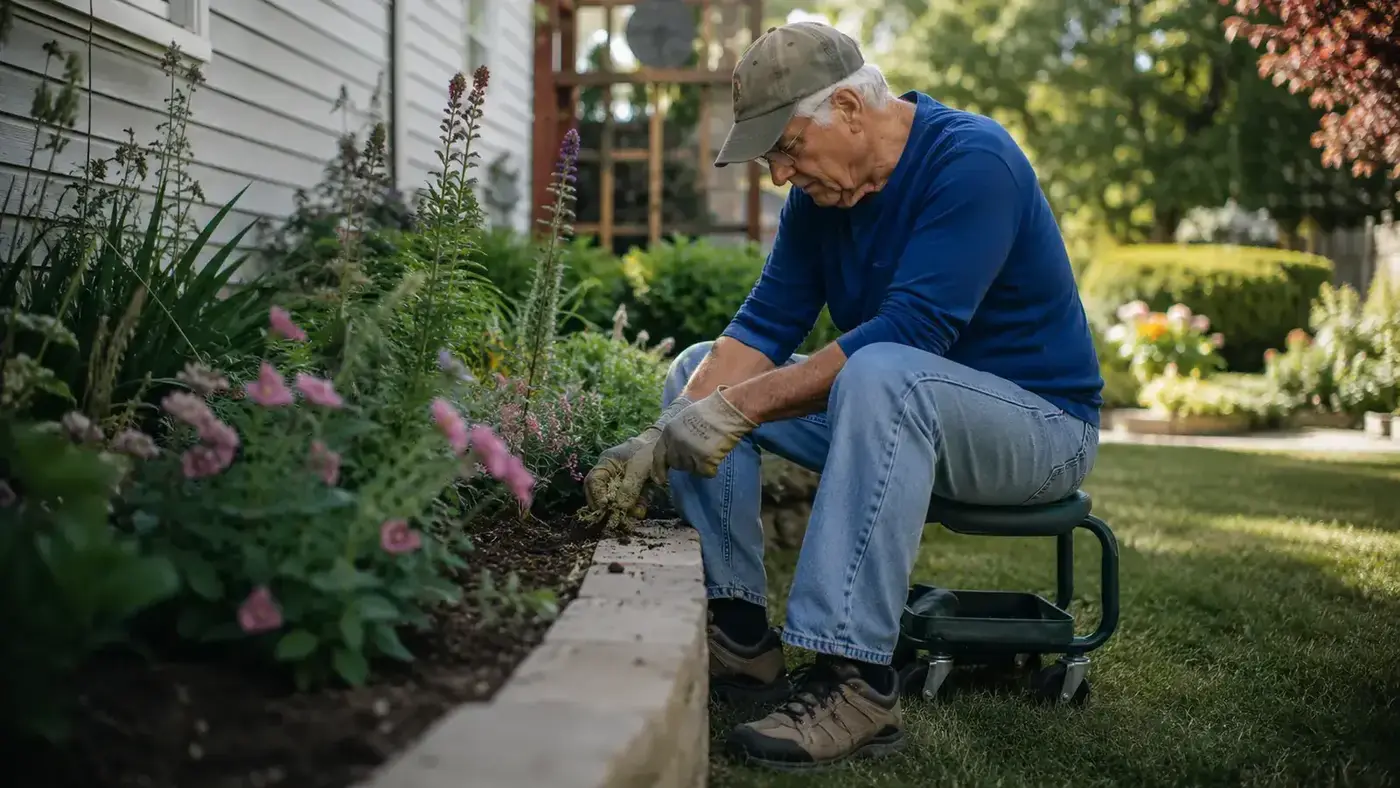
For most of my gardening life, weeding meant kneeling. Knee pad on the flagstone, one hand braced on the ground, the other yanking. At 63 with two bad knees and a lower back that voices an opinion every time I bend past 45 degrees, that routine had turned weeding from a Saturday morning task into something I'd find reasons to skip. The weeds won a lot of Saturdays. Then I started doing it from a seat, and the whole calculation changed.
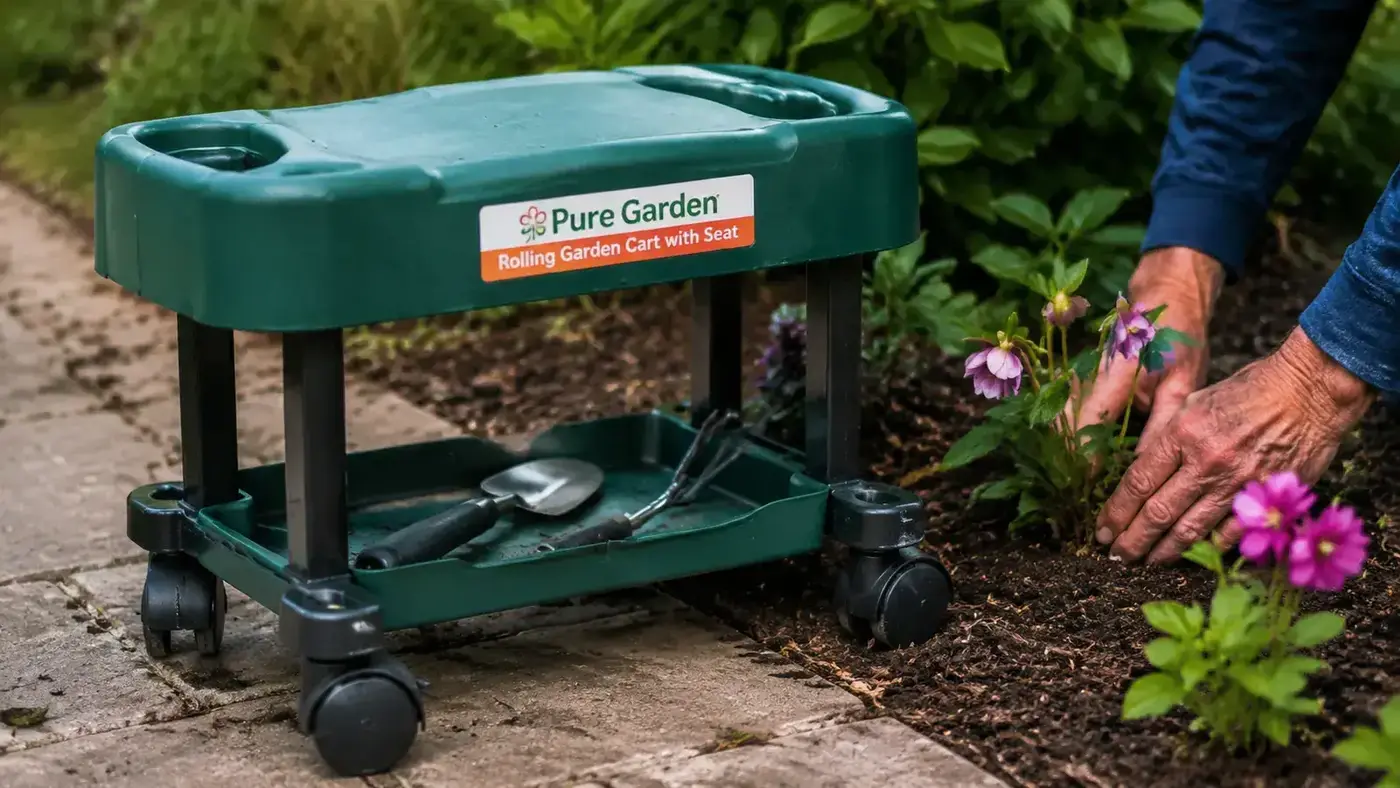
A rolling garden seat is not a complicated tool. It is a low stool on wheels with a storage tray underneath. That is genuinely all it is. But the difference between weeding on your knees and weeding from a seat is the difference between work that beats you up and work you can actually finish. This guide is about the technique, not just the tool. The tool I use is the Pure Garden rolling garden cart with seat, and I will point out where it fits into the method, but what matters here is the row-by-row rolling approach that lets you cover a full bed without planting your knees in the dirt once.
Your knees have earned a break. The Pure Garden rolling seat is how you give them one.
The Pure Garden rolling cart sits low enough to get you right down at weed level, has a tool tray that keeps your hand weeder and kneeler-pad (if you still want one for edge work) within reach, and rolls on four swivel castors that handle firm garden soil with no fuss. Rated 4.1 stars across more than 4,200 Amazon reviews.
Amazon Check Today's Price on Amazon →Step 1: Clear a Working Path Along the Bed Before You Sit Down
Before you roll anything up to the bed, walk the border once on foot. You are looking for two things: obstacles the wheels will hang up on (a buried stone edge, a sprinkler head, a section where the mulch has built up thick against the frame), and sections where the soil is still wet enough to sink under the seat. The castors on the Pure Garden cart have a combined weight capacity that is more than adequate for most of us, but soft saturated soil will sink them. Avoid weeding right after heavy rain. Give it a day and the ground firms up enough that the wheels roll instead of drag.
Also check the width of your bed from the path side. A standard 3-foot-wide perennial bed is manageable from a seat positioned at the edge. A 5-foot-wide vegetable bed is a longer reach, and you will need to work one half from one side, then move around and work the other half from the opposite side. Knowing this before you sit saves you mid-session repositioning.
While you are walking the border, drop your weeding tools into the tray before you sit. A narrow hand weeder for dandelion taproots, a wider cultivator for surface weeds, and a small bucket or bag for pulled weeds. Having everything in the tray means you never have to stand up to retrieve a tool. That is the first place people lose the kneeling-free streak.
Step 2: Set Your Starting Position at the Near End of the Bed, Not the Middle
Sit down at the near corner of the bed, not the middle of it. This sounds obvious but it is the single most common mistake I see when I describe this method to other gardeners. If you start in the middle, you immediately restrict your rolling range in both directions, you have to reach farther to cover the strip in front of you, and you end up shuffling back and forth without ever getting into a clean rhythm.
Position the cart so your knees are roughly at the edge of the bed and your arms are reaching forward maybe 18 to 24 inches to reach the nearest weeds. You want to be close enough that you are not straining your lower back to reach, but far enough back that you have clear rolling room in front of you. The Pure Garden seat sits at about 12 inches off the ground, which puts most people in a comfortable forward-lean without the deep hip flexion that causes lower back strain. If 12 inches feels too low for your hips, a folded garden kneeling pad underneath adds an inch or two without destabilizing anything.
Step 3: Work One Strip at a Time, Rolling Forward as You Go
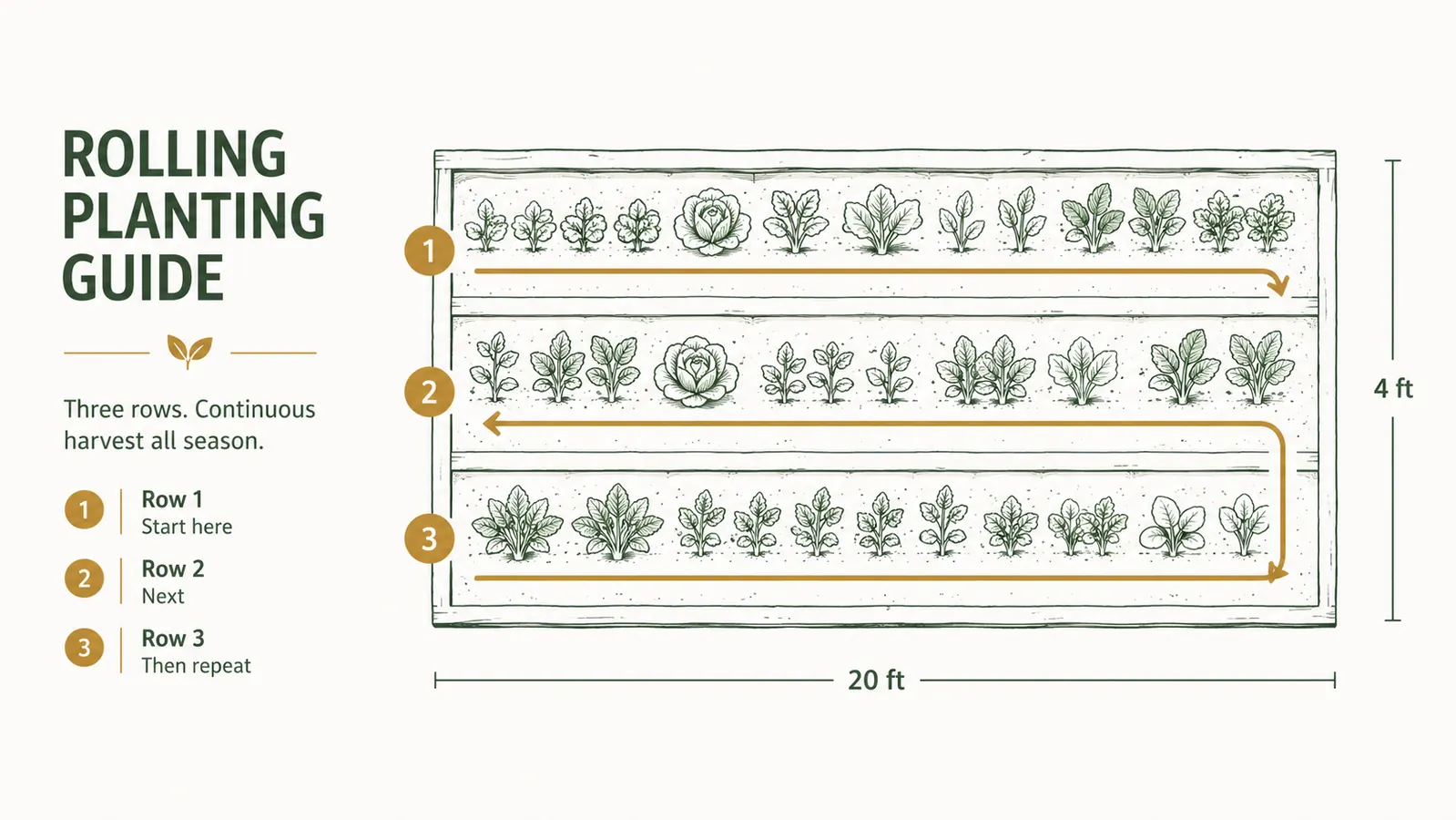
The row-by-row method is simple. Imagine your bed divided into three parallel strips running its full length. Strip one is the closest 18 inches from the path edge. Strip two is the middle 18 inches. Strip three is the back edge, farthest from where you are sitting.
Start at the near end of strip one. Work a 2-foot section of that strip, pulling or loosening weeds and dropping them in your bucket. Then roll the cart forward 18 inches and work the next 2-foot section. Repeat until you reach the far end of the bed. Do not move on to strip two yet. Rolling the full length of strip one first means your wheels never cross over ground you have just cleaned up. It also means you are always working fresh soil in front of you rather than trying to remember which sections you covered.
Once you finish strip one, roll back to the near end, shift the cart about 18 inches toward the bed, and repeat the process for strip two. You will be reaching a little farther now but still well within a comfortable seated reach. Strip three requires either moving around to the back of the bed or having a long-handled weeder for the farthest row. For a bed with a clear path on both sides, the rolling method is cleanest: do strips one and two from the front, then roll around to the back and do strip three from there.
Step 4: Use a Hand Weeder, Not Just Your Fingers, to Get the Full Root
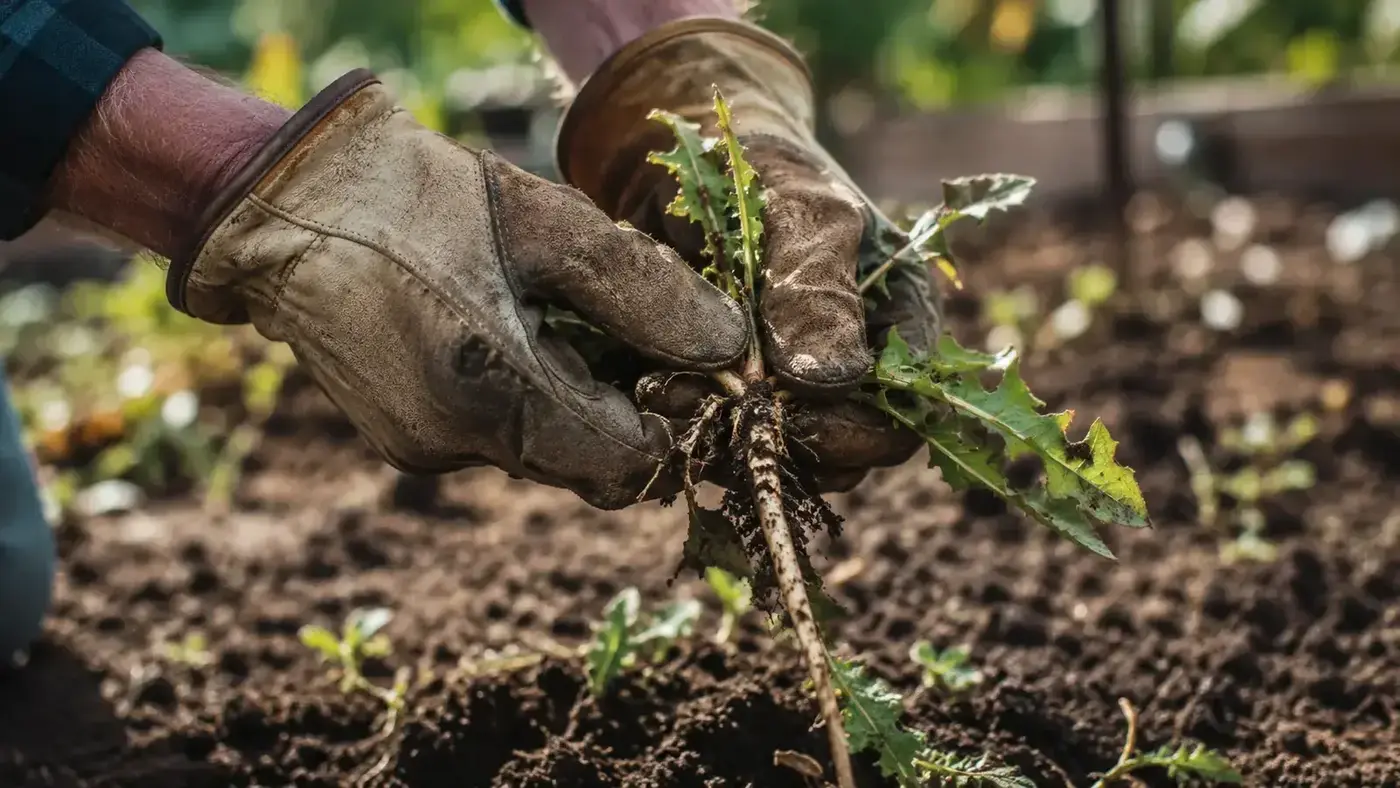
Working from a seat changes your angle on the weeds. When you are kneeling, gravity and your body weight help you lever a taproot straight up. From a seated position, you are working more horizontally, which changes how much force you need. For shallow surface weeds like chickweed, clover, and crabgrass seedlings, a wide cultivator or your gloved hand is fine. For deeper taproots like dandelions, dock, or bindweed, a narrow hand weeder or a forked taproot tool does the job that your fingers cannot.
The technique for taproot weeds from a seated position: push the weeder into the soil about an inch to the side of the stem, not right against it. Angle slightly toward the root and lever toward you while your other hand holds the stem just above soil level. The root should come out in one piece rather than snapping. A snapped taproot will resprout. On the first pass through a weedy bed, you will snap some. That is fine. Mark them mentally and hit them again in two weeks when the resprout shows you exactly where the root is still alive.
The first time I weeded my whole front border without getting off the cart once, I sat there at the end of the bed and thought: I should have done this ten years ago.
Step 5: Set a Re-Roll Schedule So You Stay Ahead of the Weeds
One reason weeding becomes overwhelming is that people let it go until the bed is a disaster, then spend a grueling three hours trying to fix it. From a seat, you can cover a 20-foot border bed in about 45 to 60 minutes on a first pass through a weedy season. But the real advantage is that follow-up sessions only take 15 to 20 minutes if you do them every week or two.
The rolling cart makes frequent short sessions practical in a way that kneeling never did. Kneeling, even 20 minutes felt like a production. Getting out the knee pads, getting down, getting back up, peeling off muddy pants. With the cart, I roll it out of the shed, sit down, do a 20-minute pass, and put it back. The low entry cost means I actually do it. That consistency is what keeps a bed manageable rather than letting it turn into the kind of job you avoid for six weeks.
I aim for one full pass every 10 to 14 days during the main growing season. That schedule catches weeds before they set seed. Once a weed sets seed, one plant becomes forty. Staying consistent eliminates that math problem before it starts.
What Else Helps
The rolling seat is the main tool, but a few supporting habits make it work better. First, water your beds the evening before a weeding session. Moist soil releases roots more cleanly than dry packed ground. You will break fewer taproots and end up with fewer regrowth problems later. Second, mulch after every major weeding session. A 2-inch layer of bark mulch or shredded leaves suppresses new weed germination and makes the weeds that do emerge sit higher and pull out easier. Third, wear gloves with a grip pattern on the fingertips. The small grip dots on modern garden gloves make a real difference when you are pulling against a root and your hands are already tired.
For beds with a hard brick or stone edging, the cart wheels sometimes catch on the corner of the edging when you try to shift position. I put a short wooden board flat on the path when I need to roll the cart over the edge for angle adjustments. Sounds like a lot of setup but it takes about 10 seconds and saves you the jolt of a wheel catching and tipping the cart sideways mid-weed.
If your main problem is not weeding a flat bed but weeding around the base of shrubs, the cart still helps for positioning, but you will want a long-handled weeder for working around root zones rather than reaching under low branches from a seated position. Use the cart to get close and seated, then switch to a stand-up weeder for the spots where the seat cannot get close enough. That combination of the rolling seat for open bed work and a stand-up weeder for shrub bases covers most of what a typical backyard throws at you.
Ready to stop paying for weeding in sore knees the next morning?
The Pure Garden rolling garden cart is one of the most straightforward upgrades you can make to how you garden if your knees or back have started making their opinions known. Four swivel castors, an interior tool tray, a seat that sits close to the ground without making it hard to stand back up, and a current price that is easy to justify. More than 4,200 reviews on Amazon, 4.1 stars. See today's price and read what other gardeners say about using it.
Amazon Check Today's Price on Amazon →