
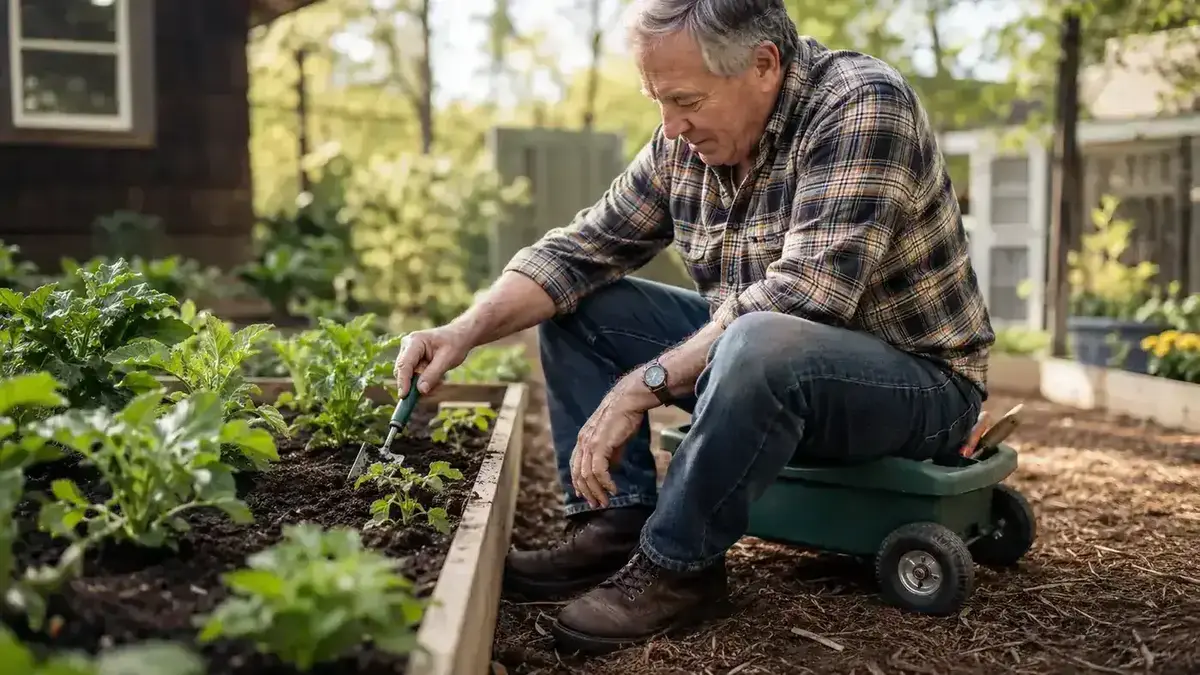
My right knee has been complaining since 2019, and last spring it finally had enough of me kneeling in the dirt. I tried the foam pad, I tried the rubber kneeler with the side handles for getting up, and I even tried a small camp stool that sank into the soil every time I shifted my weight. None of them got me through more than thirty minutes before I was back inside with an ice pack. So when I spotted the Pure Garden Rolling Garden Cart with Seat on Amazon for about thirty-two dollars, I figured it was worth a gamble. That was the first week of March. I used it through the end of August, planting tomatoes and peppers, pulling weeds out of three raised beds, and tending about forty linear feet of perennial border. Here is what I found out.
The short version: it does the main job well enough that I kept reaching for it every single session. But it is a plastic cart priced under thirty-five dollars, and it behaves like one in a few specific situations. If you go in with realistic expectations, you will probably like it. If you expect it to glide across rough grass or hold a 250-pound person on a side slope, you are going to be disappointed.
The Quick Verdict
A genuinely useful seated gardening tool for flat or semi-flat surfaces, let down by lightweight plastic construction and wheels that struggle on anything other than packed soil or pavement.
Amazon Check Today's Price →Your knees have been through enough. See if this seat fits your garden.
The Pure Garden rolling cart is one of the few seated gardening options in the budget range that actually holds up through a real season. Check today's price and availability on Amazon.
Amazon Check Today's Price on Amazon →How I Used It Through the Season
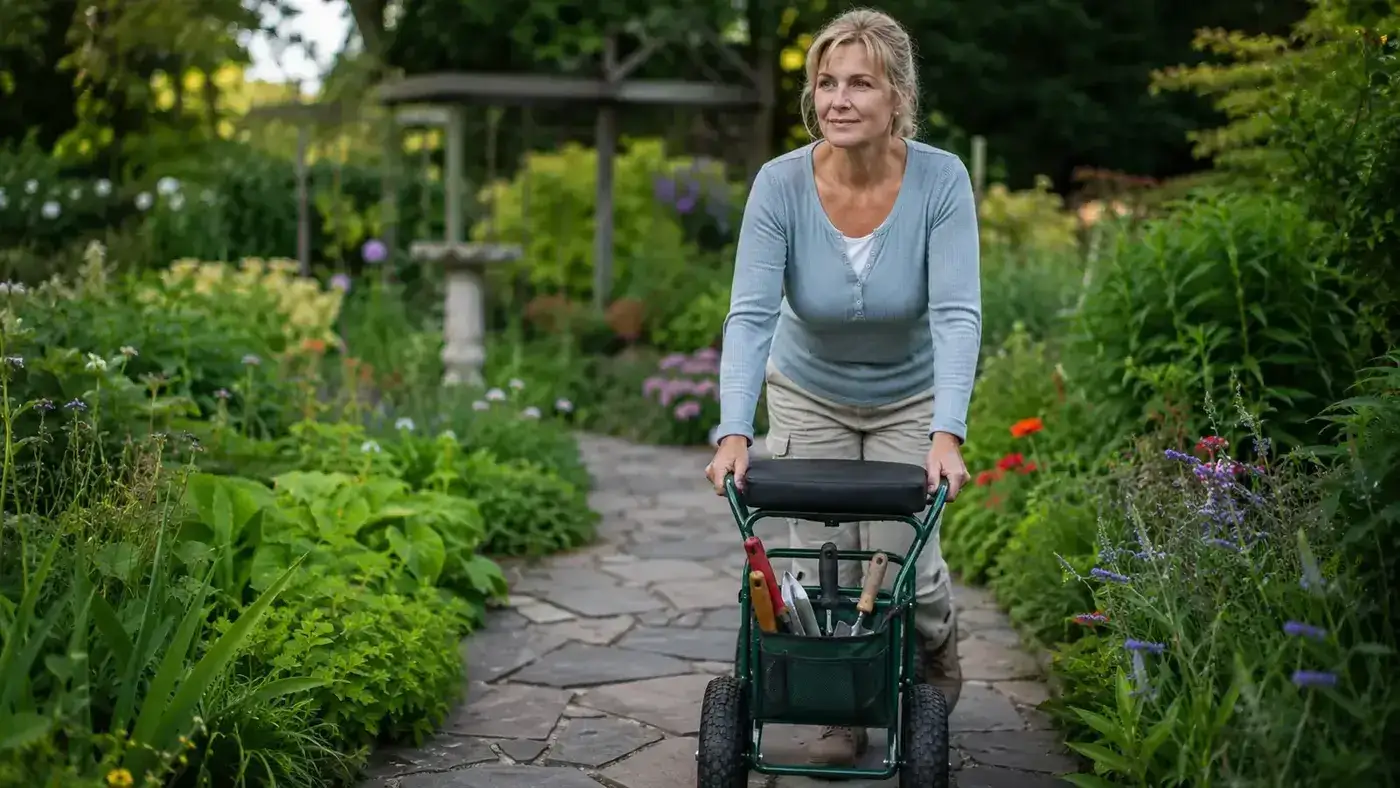
My garden setup is a mix of four raised beds at about twelve inches off the ground, a long perennial border along the back fence at ground level, and a small vegetable patch that is basically a rectangle of in-ground soil with no edging. The raised beds are the easiest place to use the rolling cart because the seat height puts my hands at almost the perfect working level without hunching. I would roll up to a corner, do a section of planting or weeding, give the cart a gentle push to reposition myself, and keep going. That rolling movement, just a few inches at a time, is the whole point of this thing and it genuinely delivered. I stopped and stood up far less often than I did with a fixed stool.
The ground-level perennial border was trickier. My soil back there is compacted and a little uneven from tree roots. The small plastic wheels on the cart handled level sections fine but would catch on bumps and tip slightly when I leaned forward to reach. Nothing dangerous, but I noticed it and adjusted my lean accordingly. Once I figured out where the balance point was, it became second nature. On the truly rough patches near the far fence post, I just stood up, moved the cart, and sat back down. Two extra seconds, no big deal.
I weigh about 195 pounds. The cart has a listed weight capacity of 250 pounds and I never felt the seat flex or crack under me, even sitting down with a bit of plop when my back was tired. The plastic bench top does flex slightly when you put your full weight on the edge, which is worth knowing about if you have a habit of sitting on the corner of things.
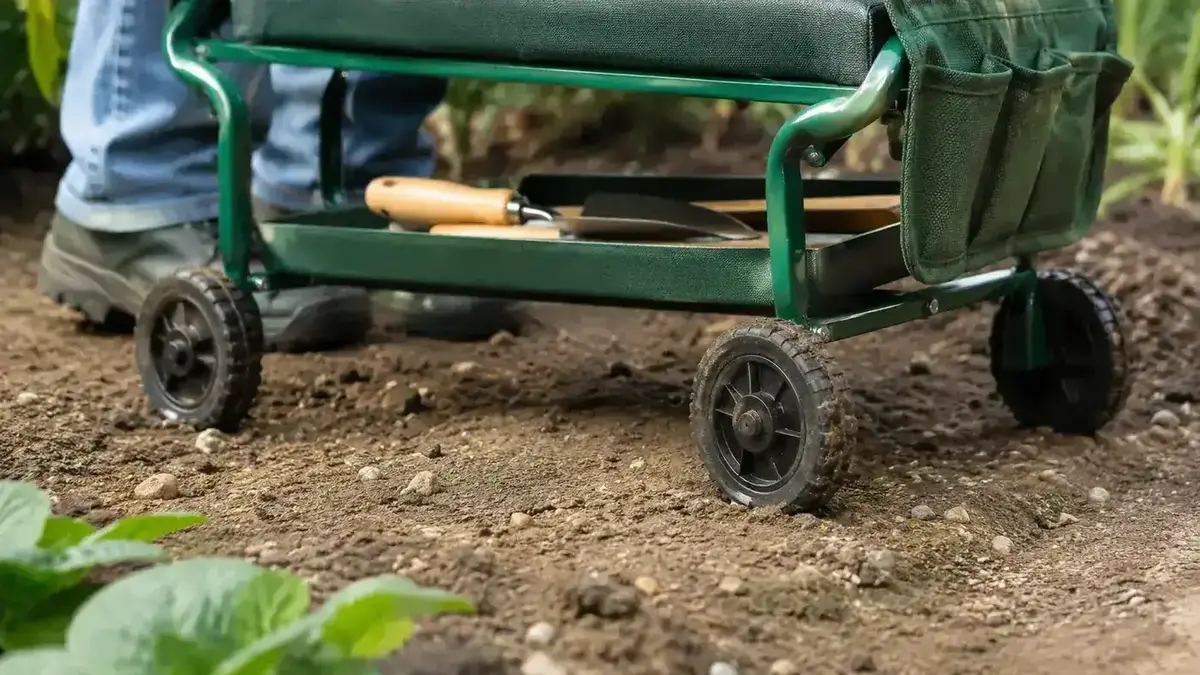
The Tool Tray: More Useful Than I Expected
There is a storage bin under the seat, and it is bigger than it looks in the photos. I kept a hand trowel, a transplanting fork, a folding knife for cutting plant ties, and a small bottle of liquid fertilizer in there for most of the season without any overcrowding. The interior tray that holds tools upright did its job for the first few months, then one of the divider tabs cracked at the base in early July. It still stayed in place and held tools, just without the same rigidity. I would call that a minor failure on a thirty-two-dollar product, not a deal-breaker.
Having tools right underneath me instead of walking back to the shed or hunting through a bag on the ground turned out to matter more than I anticipated. I am more likely to do a small weeding pass when I do not have to gather tools first, and the cart made that easy. The green plastic lid sits firmly when closed, so if you tip the cart to move it between beds, nothing spills out.
Where the Build Quality Shows Its Price
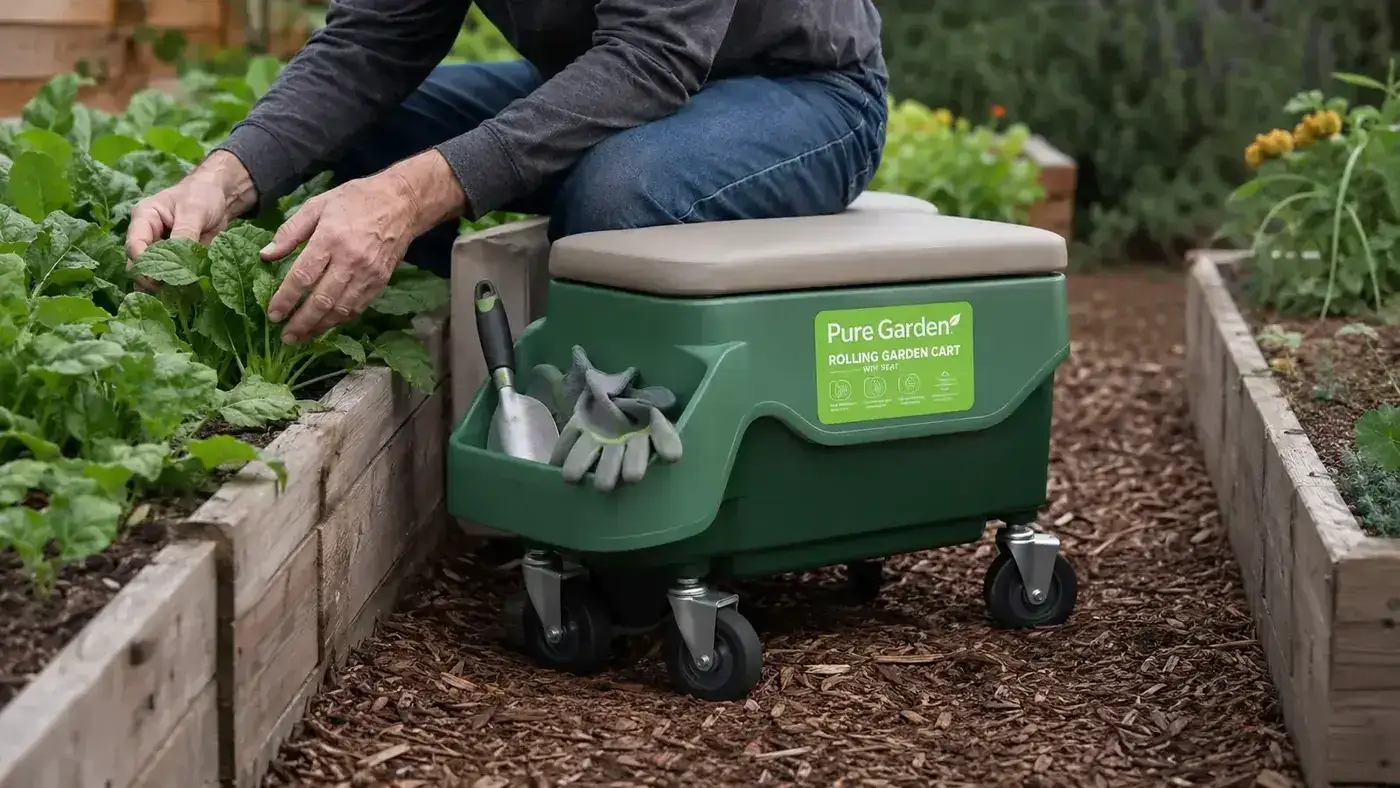
The Pure Garden rolling seat is molded from green plastic with a round seat pad, four swivel casters underneath, and a storage compartment that doubles as the main body. The whole thing weighs about five pounds, which is a genuine benefit when you are carrying it from the shed. The tradeoff for that light weight is that the plastic walls of the storage compartment are not especially thick. You can feel them flex if you push on the sides.
The swivel casters are the most honest reflection of what this product is. They roll smoothly on concrete, patio pavers, or packed garden path. They roll adequately on firm dry soil. They struggle on soft soil after rain, on thick grass, and on gravel. On those surfaces, you end up dragging or carrying the cart rather than rolling it, which is fine since it only weighs five pounds, but it is not the frictionless rolling experience you might picture. If your garden is mostly raised beds on a paved path, you will barely notice. If your working surface is soft lawn or loose-tilled vegetable garden, set your expectations accordingly.
The seat pad is a thin round cushion integrated into the plastic seat. It provides enough padding for sessions up to an hour before you start to feel it. For longer sessions I put a small folded towel on top, which helped. Some folks in the reviews mention adding an aftermarket cushion and that sounds like a reasonable upgrade if you are planning longer sits.
On flat packed soil and pavement, this thing changed how I garden. On soft soil after rain, I carry it instead of rolling it. That is the honest version.
Getting On and Off Without a Struggle
This is the part that matters most if you have bad knees, a bad hip, or back trouble. Getting on and off the cart is easier than getting up off the floor or up from a low kneeling pad, but it is not the same as rising from a chair with armrests. The seat sits low, roughly eight to nine inches off the ground, which is low enough that you are still doing some work to stand. There are no side handles or grab bars on this model. If you need something to push off of, you will be pushing off your own thigh or a nearby raised bed edge. That was workable for me, but I want to be upfront about it.
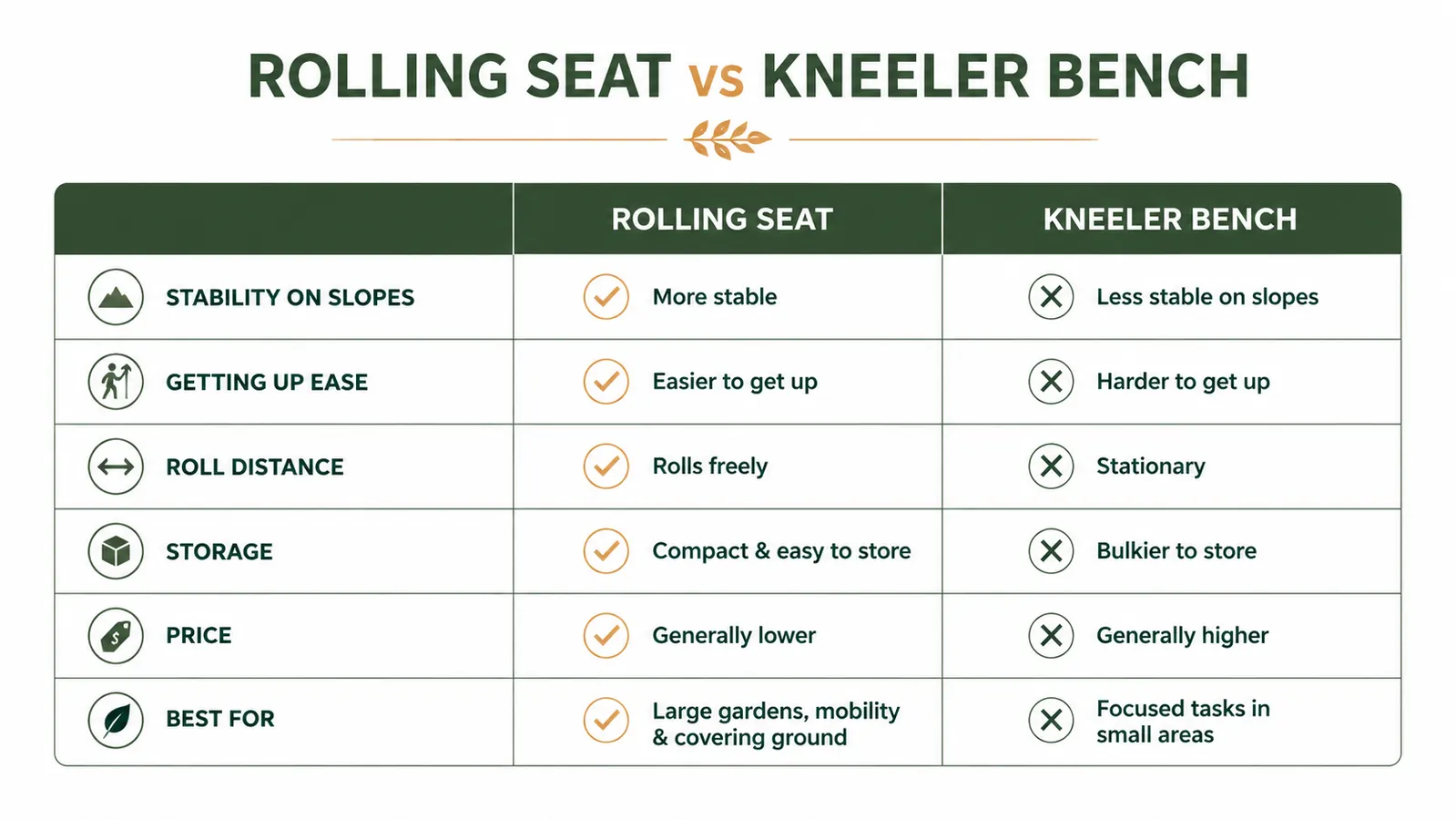
For folks with significant knee or hip replacement, a kneeler bench with the flip-over handles might be a better fit for the getting-up step, though you lose the rolling mobility. That comparison is worth thinking through before you buy. I have a longer look at both options in my article on the rolling seat versus the kneeler bench if you want to dig into that question.
How It Held Up Over Five Months
I stored the cart outside under the overhang of my shed for most of the season, exposed to rain and dew but not direct sun for extended periods. By August, there was some fading to the green plastic on the top of the seat and on the tray divider. No cracking or warping from the outdoor storage, which I found reassuring. The casters still roll as freely as they did on day one. The lid still closes with a solid snap. The seat pad has compressed a bit but has not split or torn.
One caster picked up a small pebble in late June that made a grinding sound for about a week before it worked itself free. I checked and the caster mount was fine afterward. I would not put this through a full year of wet winter storage in a cold climate, but for three-season use in a covered spot, it came through reasonably well.
At 4.1 stars and just over 4,200 reviews on Amazon, the rating is honest. It is a well-liked product with real limitations that a chunk of buyers notice. The lower-star reviews mostly fall into two categories: people who tried to use it on soft soil or thick grass and found the wheels useless, and people who are heavier and found the seat uncomfortably low. Both of those are legitimate points. Neither of them applied to my situation, so my experience landed on the positive side.
What I Liked
- Rolling movement on flat packed surfaces genuinely reduces how often you need to stand and reposition
- At around five pounds, light enough to carry between beds with one hand
- Tool storage underneath keeps trowels and hand tools close without a separate bag
- Holds up through a three-season outdoor storage with no cracking or warping
- Low price makes it a low-risk first try for someone unsure if seated gardening will work for them
Where It Falls Short
- Wheels struggle on soft soil, thick grass, and gravel, turning rolling into dragging
- No grab bars or side handles, so getting up still requires some effort from the legs
- Thin seat padding gets uncomfortable after about an hour without an added cushion
- Interior tray divider tab cracked after about four months of regular use
- Seat is low (eight to nine inches), which may not suit gardeners with significant hip or knee replacement limitations
Alternatives I Considered
Before I landed on this cart, I looked at a few other options. The classic garden kneeler bench, which flips upside down to become a low stool with handles on either side for getting up, is the main alternative in this price range. It does not roll, so you get up and reposition more often, but the handles are a meaningful advantage for anyone who needs something to grab when standing. If getting up from a low seat without support is your biggest concern, the kneeler bench addresses that problem directly. I compare the two options in more detail in the rolling seat versus kneeler bench piece if that decision matters to you.
I also looked at a couple of metal-frame garden scooter stools, the kind that look like a small rolling bucket seat on casters. They tend to cost twice as much, have larger wheels that handle soft ground better, and are heavier to carry. If you have a larger garden with more varied terrain and do not mind spending more, those might be worth investigating. For a smaller garden with raised beds or pavement, the Pure Garden cart is hard to beat on value.
Who This Is For
This rolling cart seat is a good fit if you have sore knees, a stiff lower back, or any condition that makes kneeling painful, and your main gardening surface is raised beds, paved paths, packed soil, or a combination of those. It is also a good fit if you are not sure yet whether seated gardening will work for you and you want to try the concept without spending significantly on a heavier metal version. The low price and light weight make it a reasonable entry point. For ten or fifteen years of consistent heavy use, you would want something more substantial. For several seasons of regular backyard gardening, it is a solid choice. If you want a quick look at the other reasons a rolling garden stool earns its place, I covered ten of them in the rolling garden stool listicle.
Who Should Skip It
Skip this cart if most of your gardening happens on soft lawn, thick turf, or loose-tilled ground. The wheels will frustrate you within the first session. Also skip it if you need grab-bar support to stand up safely from a low seat. The lack of handles is a real gap for people who depend on that support, and there are better options that address it directly. And if you are significantly over 250 pounds, the seat flex when you sit down hard will probably bother you even if the cart technically holds the weight.
If your garden is mostly raised beds or hard paths, this seat is worth every dollar of the current price.
The Pure Garden rolling cart with seat is one of the few budget-friendly seated gardening solutions that actually holds up through a real season of use. See current pricing and shipping options on Amazon.
Amazon Check Today's Price on Amazon →