
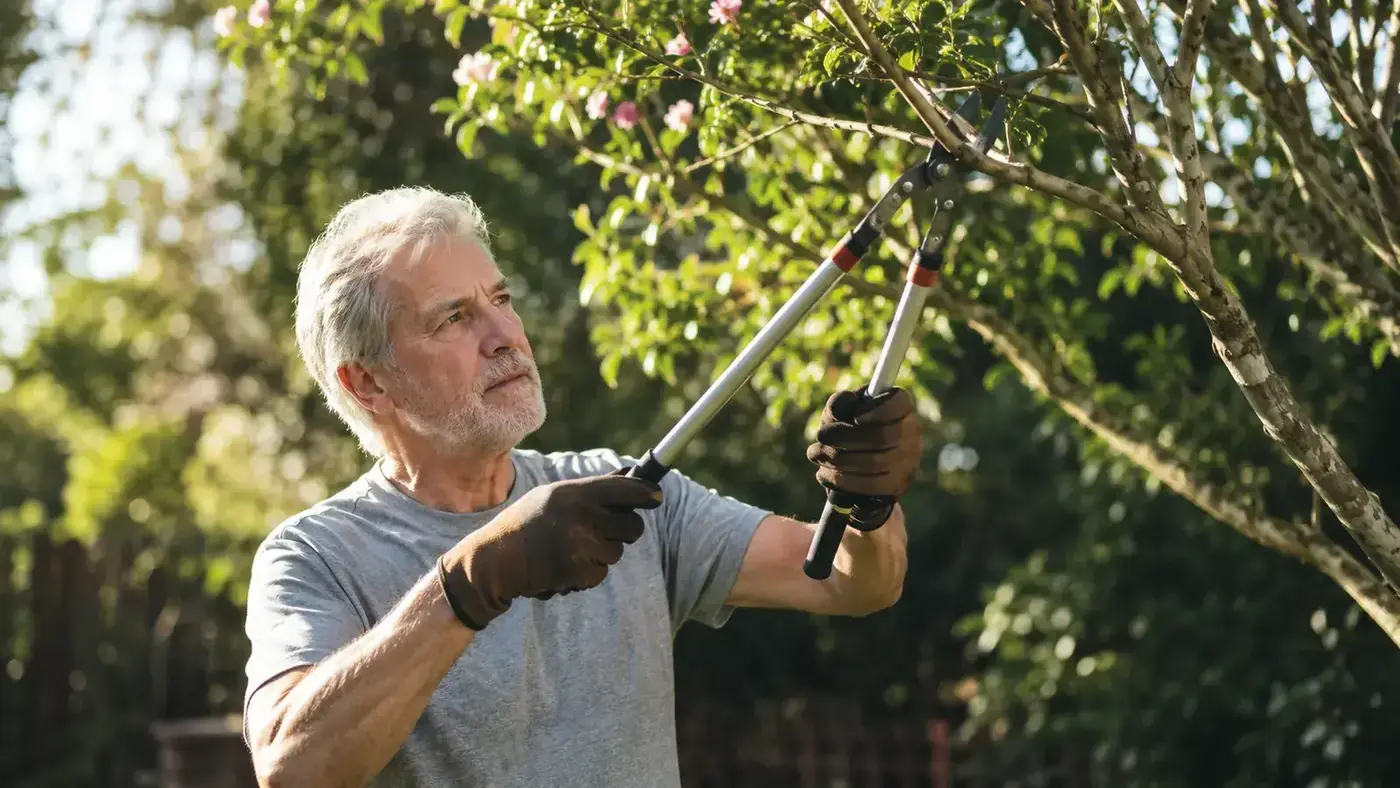
Last spring I finally admitted that the old standard bypass loppers I had been using since the Clinton administration were wearing me out. My left shoulder has had some trouble since a rotator cuff strain back in 2022, and every time I went after the crape myrtles out front, I would end up sore by noon and parked on the porch by two. Pruning season, which I used to enjoy, was starting to feel like a chore I dreaded. A neighbor mentioned the Spear & Jackson 8290RS ratchet anvil loppers. I bought a pair. That was two growing seasons ago, and I have been using them hard ever since.
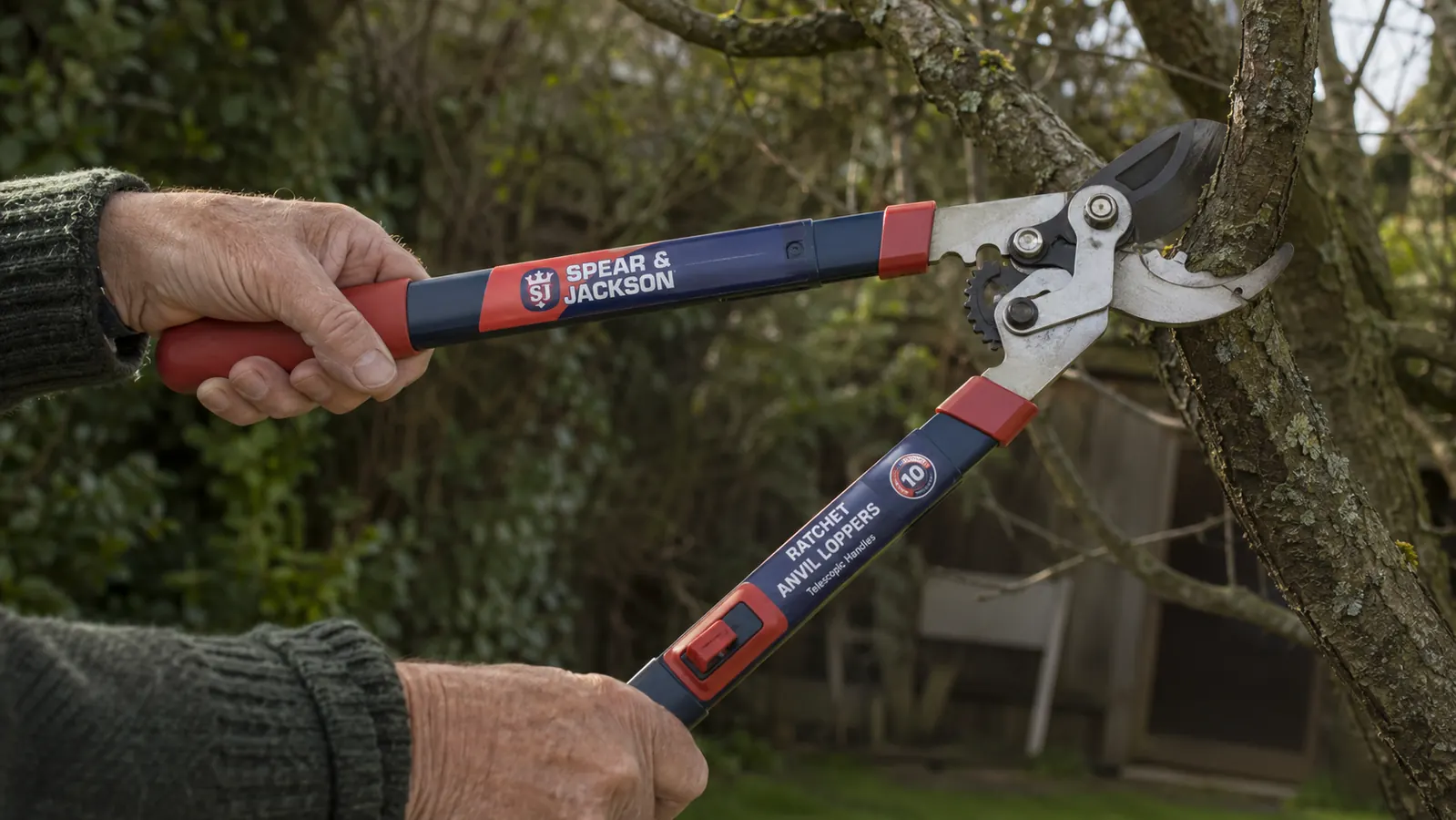
This is a review of those two seasons. The Spear & Jackson 8290RS has a ratchet mechanism built into the pivot that multiplies your cutting force across three incremental stages per stroke. That one feature is the reason I am still able to prune my own yard at 64. I want to be honest about what it does well, where it falls short, and who should and should not bother buying a pair.
The Quick Verdict
The ratchet mechanism genuinely works and the telescoping handles give you real reach. A few quality niggles keep it from a perfect score, but for anyone whose grip or shoulder strength is not what it was, this is the best lopper investment I have made in years.
Amazon Check Today's Price →Your shoulders are talking. Maybe it's time to listen.
The Spear & Jackson 8290RS ratchet loppers let you cut branches up to two inches thick without forcing them through in a single brutal squeeze. If standard loppers have been leaving you sore, these are worth a serious look.
Amazon Check Today's Price on Amazon →How I Have Used These Loppers
My yard runs about a third of an acre on the outskirts of Knoxville. We have three crape myrtles out front that bloom if I get after them in late winter and early spring. There is a mixed hedge along the back fence, mostly privet with some overgrown forsythia, that I keep at chest height. And there are two large knockout rose bushes on the side yard that throw up thick canes every year, some of them closing in on an inch and a quarter in diameter by fall.
Over two seasons I estimate I have made somewhere north of 300 cuts with these loppers. Early spring crape myrtle pruning is the heaviest session, maybe 80 cuts in a morning. The privet hedge gets trimmed twice a season, and the roses get a serious cutback in late October. I have run these through wet green wood, dry old wood, and the kind of woody canes that would have stopped my old bypass loppers cold.
I also handed them to my wife Carol, who is 61 and has some arthritis in her right hand. She used them on the forsythia and came back in saying they were the first loppers she had used where she felt like she was in control of the cut rather than just fighting the branch. That report matters more to me than anything I could say on my own.
The Ratchet Mechanism: What It Actually Does
Let me explain what the ratchet does, because most people who have never used one assume it is just a gimmick. With a standard bypass lopper, you squeeze both handles together in one continuous motion and the blade drives through the branch in a single push. If the branch is thick or the wood is hard, all the resistance hits you at once. If your grip is weakened by arthritis, an old injury, or just age, you may not be able to complete that stroke cleanly. The branch gets crushed partway through instead of cut, which is bad for the plant and hard on you.
The ratchet mechanism on the 8290RS breaks that single long squeeze into three shorter incremental strokes. Each partial squeeze moves the blade a little further and then the ratchet holds it there, so you do not have to maintain full grip pressure throughout the cut. You release slightly, the tool holds the position, and then you squeeze again to advance. The net effect is that you are applying much less force at any given moment, but the cumulative force delivered to the cut is the same. For branches between three-quarters of an inch and about an inch and three-quarters, the difference is dramatic. I was able to cut things cleanly that my old standard loppers would have left me battering and bruising.
Carol used them on the forsythia and came back in saying these were the first loppers she had used where she felt like she was in control of the cut rather than just fighting the branch.
Telescoping Handles: The Feature I Underrated
The 8290RS handles extend from around 28 inches fully retracted to about 40.5 inches fully extended. When I first bought them, I figured I would mostly use them at the shorter setting and only extend them for high branches. Two seasons in, I use them extended almost all the time. The longer handles do two things for me. First, they move more of the cutting leverage down into my arms and shoulders rather than my wrists and grip, which is where the arthritis and old injuries tend to bite. Second, they let me make cuts on mid-height branches while staying upright rather than leaning in. Leaning in kills my lower back. Staying upright and reaching with extended handles means I can prune for a full morning without paying for it in the afternoon.
The locking collar for the extension is a simple twist-and-lock design. It has held firmly through two seasons without any sign of slipping. The fiberglass handles are light, much lighter than the wood-handled loppers I grew up with. The grip cushioning is adequate, though not exceptional. After about an hour of heavy cutting, the cushioning starts to feel a little thin. I added a pair of padded garden gloves and that solved it.
Blade Quality and What It Cuts Cleanly
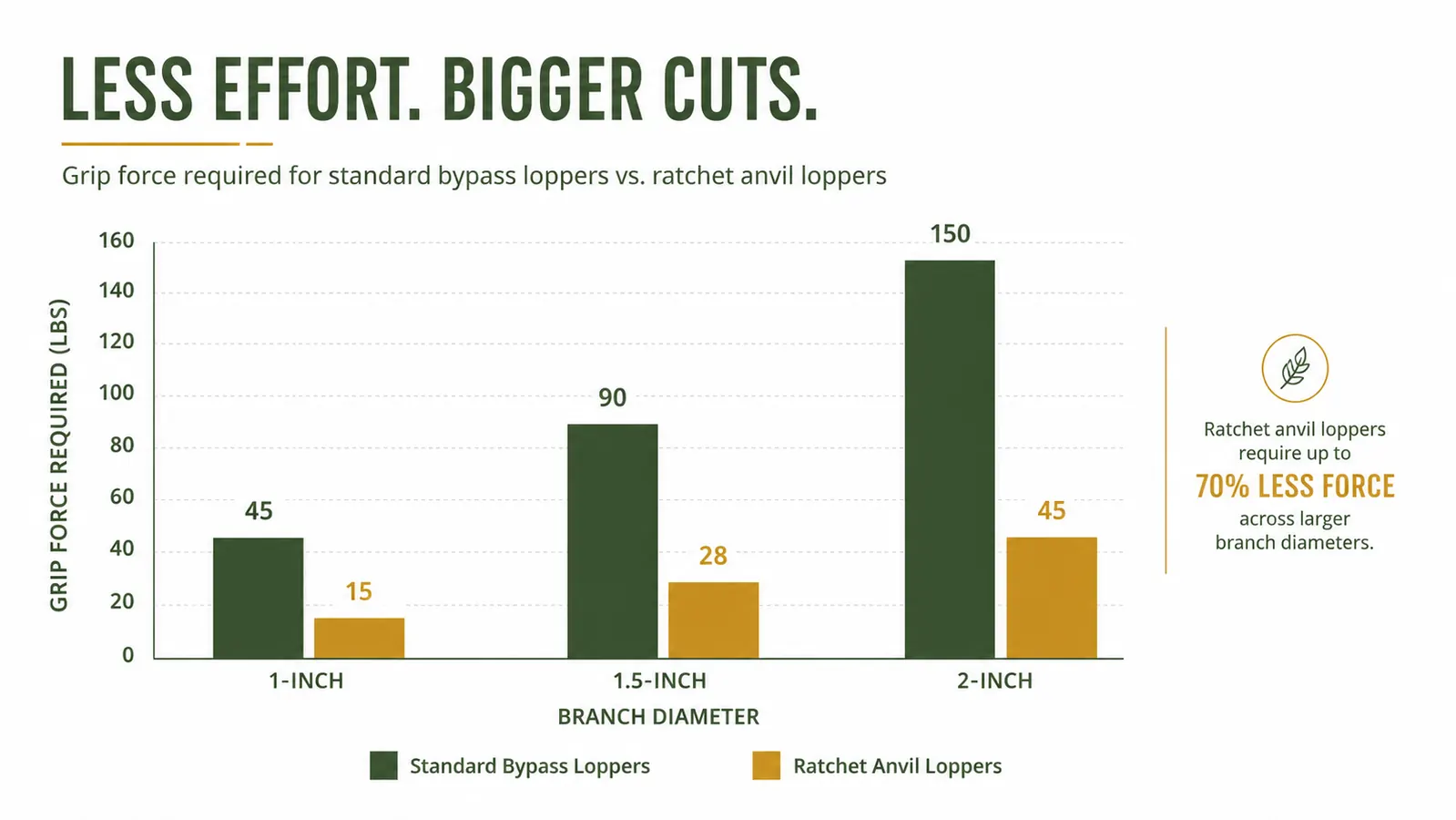
The 8290RS is an anvil lopper, not a bypass. That distinction matters. A bypass lopper uses two blades that slide past each other like scissors, giving a cleaner cut on living green wood. An anvil lopper uses a single sharpened blade that presses down against a flat anvil plate. The anvil design generates more cutting force for less effort, which pairs well with the ratchet mechanism. The trade-off is that the anvil can bruise stem tissue slightly more than a bypass cut does on very tender green growth.
For my uses, crape myrtles and privet hedge and rose canes, the anvil design has been perfectly adequate. My crape myrtles are healthy and have bloomed well both seasons after trimming. The cuts are clean and heal without signs of bark-splitting or disease entry, which is the practical test that matters. I would not recommend an anvil lopper for very fine ornamental work on delicate perennials, but for woody shrubs and established trees, the 8290RS cuts cleanly.
The blade is rated for branches up to two inches. I have cut one-inch-and-three-quarter branches without trouble. I have attempted branches closer to two inches and found that it is technically possible but takes a full four to five ratchet strokes and leaves the blade a bit dull if you do it repeatedly. The sweet spot for this tool is branches in the three-quarter-inch to one-and-a-half-inch range. That covers the majority of maintenance pruning in an average backyard.
Two Seasons In: What Has Worn and What Has Not
The ratchet mechanism itself has stayed tight and positive through all the use I have put on these loppers. No looseness, no slipping, no signs of wear in the pawl engagement. That is the thing I was most worried about, because a ratchet that starts slipping is worse than no ratchet at all. After two seasons, it still clicks through all three stages without hunting or hanging up.
The blade has dulled somewhat, as blades do. I touch it up once a season with a flat sharpening stone, a five-minute task. If you want to skip sharpening entirely, these are not the loppers for you. But if you are willing to sharpen them once a year the way you would a kitchen knife, the blade stays functional. The coating on the handles has held up without cracking or peeling, which was a problem I had with a cheap pair of bypass loppers I bought a few years back.
One thing that has worn is the rubber bumper stop between the handles. After two seasons of heavy use, it has compressed and the handles now clap together with a bit more impact than they did when new. It is a minor annoyance, not a functional failure, but I notice it. Replacement bumpers can be cut from rubber weatherstripping, so this is a ten-minute fix if it bothers you.
What I Liked
- Ratchet mechanism genuinely multiplies cutting force, making thick branches manageable for anyone with limited grip strength
- Telescoping handles from 28 to 40.5 inches let you work upright and reduce strain on wrists and lower back
- Light fiberglass construction, considerably easier to hold at shoulder height than heavier wood or steel handle loppers
- Ratchet mechanism has stayed tight and reliable across two full seasons of hard use
- Blade holds an edge reasonably well and responds well to simple annual sharpening
- Cutting capacity is honest: three-quarter-inch to one-and-a-half-inch branches are effortless, up to two inches is achievable
Where It Falls Short
- Anvil blade design means slightly more tissue bruising than bypass on tender live growth, not ideal for fine ornamental work
- Handle cushioning thins out after about 60 minutes of continuous heavy cutting, padded gloves help
- Rubber bumper stop compresses with heavy use over time and needs occasional replacement
- Very thick branches near the two-inch limit take multiple full ratchet strokes and will dull the blade faster
- Blade sold without a cover or sheath, raw blade sitting in the shed needs a bit of care to prevent rust if stored damp
Alternatives I Considered
Before settling on the Spear & Jackson 8290RS, I looked seriously at the Fiskars PowerGear2, which uses a gear mechanism rather than a ratchet to multiply force. The PowerGear2 is a bypass design rather than anvil, so cuts on tender live growth are cleaner. If you are doing a lot of pruning on young ornamental shrubs or roses in active growth, that bypass cut quality might matter to you. For my maintenance pruning on established woody plants, the anvil cuts have been fine. For a full side-by-side comparison of how the two tools stack up in real yard use, I have a separate piece on this site worth reading before you decide: see my comparison of the Spear & Jackson versus the Fiskars PowerGear loppers.
Who This Is For
If your grip strength, wrist strength, or shoulder mobility has been making pruning increasingly miserable, the ratchet mechanism on the 8290RS is a genuine solution, not a marketing claim. These are built for people who need to make real cuts on real woody shrubs and trees without grinding their body down in the process. The telescoping handles add to the ergonomic case by letting you work at a natural upright posture. If you are in your 50s, 60s, or 70s and your standard bypass loppers have started feeling like a punishment, this is the tool to switch to.
These are also a solid buy for anyone who gardens on a budget and wants a lopper that will hold up for several seasons without requiring expensive replacements. At current pricing, this is not the cheapest option on the shelf, but it is well below the top-tier professional loppers, and two seasons of hard use suggest the value-to-durability ratio is good.
Who Should Skip It
If your primary pruning work is fine ornamental trimming on tender perennial stems or very young shrubs, the anvil design is the wrong choice. A bypass lopper gives a cleaner, less bruising cut on soft live tissue. The 8290RS is built for woody, established growth, not for cutting back delphiniums or shaping young topiary. Also, if you plan to leave your tools in the shed without any maintenance or sharpening, the blade will dull and eventually disappoint you. These reward modest care; they do not thrive on neglect.
And if you have branches over two inches in diameter as your regular target, you need a pruning saw, not loppers of any kind. The 8290RS will technically attempt a two-inch cut but it is not built for that work on a sustained basis.
Two seasons of crape myrtles, privet, and roses. Still going strong.
The Spear & Jackson 8290RS is the lopper I recommend to anyone who has been fighting their tools more than their garden. The ratchet mechanism is real, the handles are light, and the build quality has held up through serious real-yard use. Check today's price on Amazon and see whether it makes sense for your situation.
Amazon Check Today's Price on Amazon →