
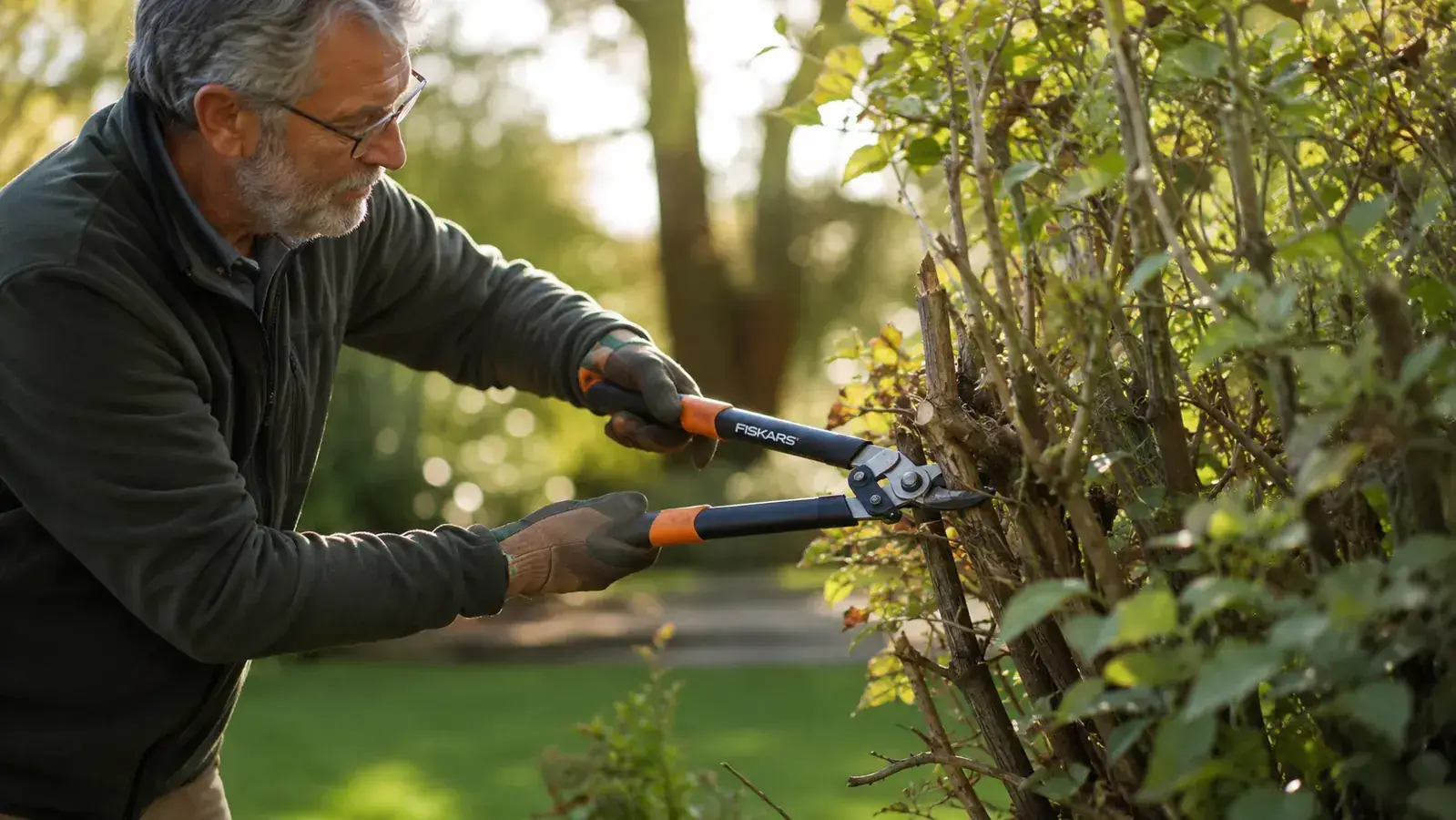
I used standard bypass loppers for years. Good brand, sharp blade, solid handles. And every pruning session ended the same way: hands cramped up by the second or third shrub, and I'd be flexing my fingers for an hour afterward trying to get the feeling back. I thought that was just how it went after sixty-something. Then a neighbor handed me his ratchet loppers and said, 'Try this on that crape myrtle.' I went through five limbs and barely knew I'd squeezed anything. That was three years ago. The standard bypass pair has been hanging in the shed ever since.
The Spear and Jackson 8290RS is the pair I landed on after testing a few options. Rated 4.6 stars across 5,183 reviews, which is the kind of number that means real people actually use the thing. I'll get into the specifics in each reason below. But first, here's the short version: ratchet loppers break the cut into small, stacked bites instead of demanding one big squeeze. Your hands can do small bites all day. One big sustained squeeze wipes them out fast.
Hands giving out halfway through pruning? The 8290RS cuts in stages so yours don't have to.
The Spear and Jackson 8290RS ratchet loppers have 4.6 stars from over 5,000 gardeners. Telescoping handles, heavy-duty ratchet mechanism, and a price that doesn't require a second mortgage.
Amazon Check Today's Price on Amazon →The ratchet mechanism multiplies your cutting force without asking more from your grip
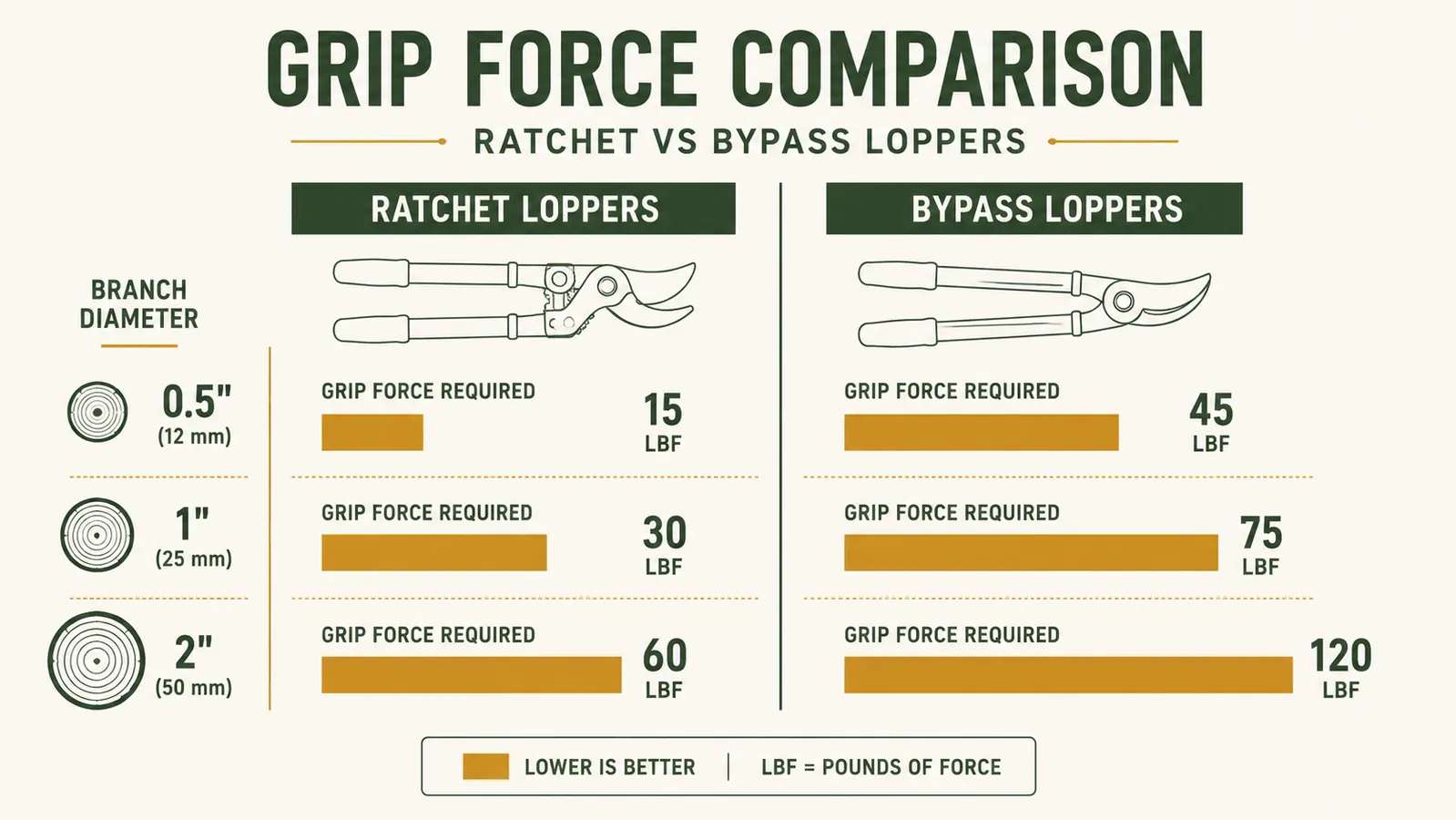
A standard bypass lopper is one squeeze, start to finish. You load all your grip strength into that single motion. A ratchet lopper lets you squeeze partway, release slightly, and let the mechanism hold its position while you reset your hand. Then you squeeze again from a neutral position. Each small squeeze builds on the last until the blade completes the cut. On a two-inch branch, that's the difference between your hand screaming and your hand barely noticing. The 8290RS uses a three-stage ratchet that handles branches up to two inches cleanly. I've pushed it to two and a quarter on green wood and it still got through.
Telescoping handles mean you reach branches without pulling your shoulder forward
The 8290RS extends from about 28 inches to just over 40 inches. That extra reach sounds like a comfort thing, but it's actually a force thing. When you can stand upright and reach a branch at arm's length, you're pushing with your whole body behind the handles. When you're stretching and leaning just to get the blade on the branch, you've lost most of your mechanical advantage before you even start squeezing. Keeping your body behind the tool is where the real effort savings come from.
You can pause mid-cut without the branch snapping back and torquing your wrist
With bypass loppers, if you lose grip halfway through a tough branch, the spring tension pushes the handles back open, the branch pinches the blade, and your wrist takes the torque. On the ratchet, you release and nothing moves backward. The mechanism holds the blade position. That might sound minor until you've had a wrist that doesn't bounce back the way it used to. The 8290RS ratchets click firmly enough that I've never had one slip back on me, even on green hardwood limbs.
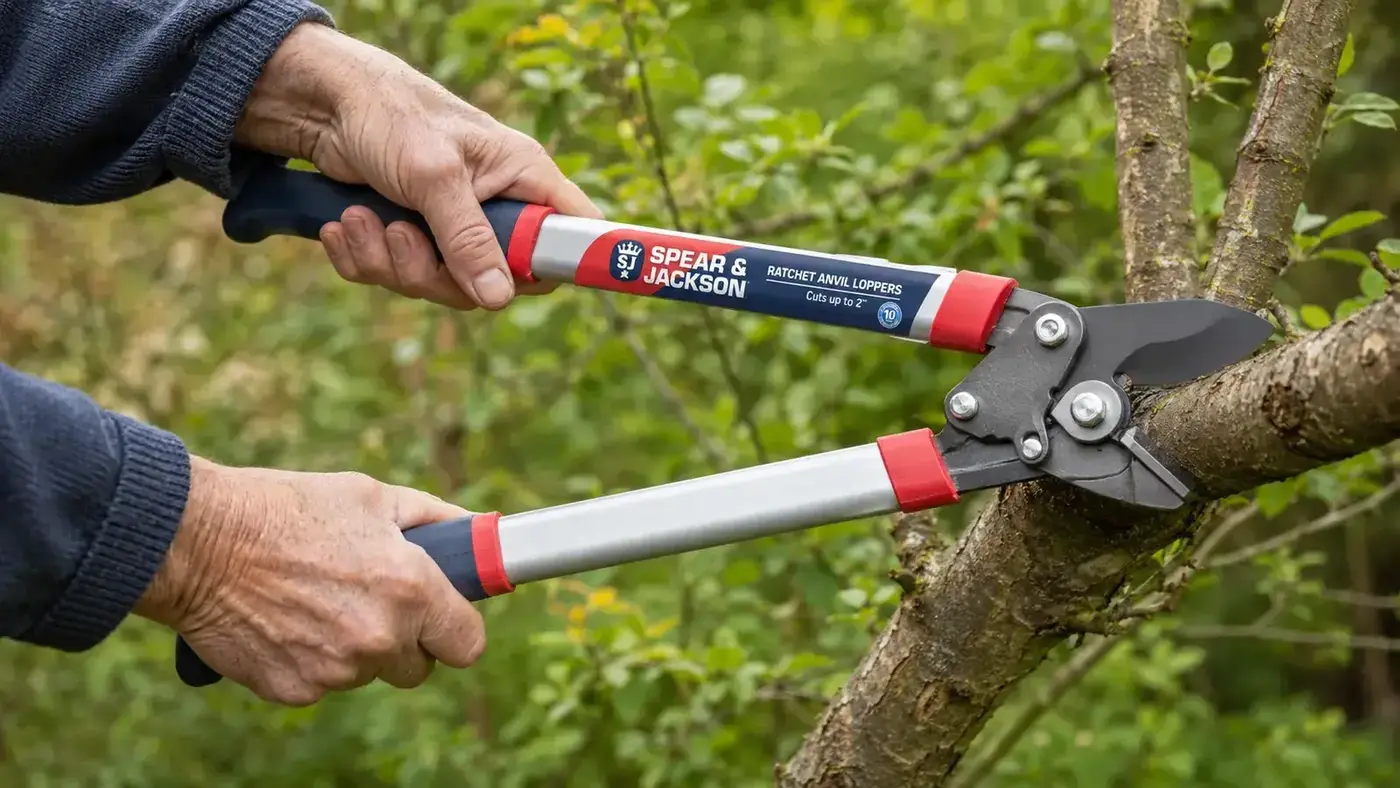
Anvil-style cutting head distributes force across the whole blade, not just the edge
The 8290RS is an anvil lopper, meaning the blade cuts down onto a flat surface rather than sliding past a counter-blade the way bypass does. On fresh green growth, bypass feels cleaner. On woody, dry, or dead material, the anvil wins because you're using compression rather than a slicing shear. Compression takes less sustained force and puts less rotational strain on the wrist. For anyone dealing with arthritic fingers or reduced grip endurance, that distinction matters by the fifteenth cut.
Long handles keep the work away from your body so your joints stay in a neutral position
Shorter-handled loppers force you to bring the branch close to your body to get enough leverage. That often means your elbows are bent, your wrists are angled, and your shoulders are rolled forward. Extended handles let you work with straighter arms and neutral wrists. Neutral wrist position is the single biggest factor in whether a gardening session ends with hand cramps or not. Physical therapists say it constantly. I learned it the slow way.
I went through five crape myrtle limbs and barely knew I'd squeezed anything. The standard bypass pair has been hanging in the shed ever since.
The ratchet gives you a rest point so you can shake out your hand between stages
This sounds small. It is enormous in practice. With bypass loppers, you have to keep constant pressure on the handles or the cut goes nowhere. With a ratchet, you get to a stage, release, shake out your hand for two seconds, and then continue. That tiny break between stages keeps blood flowing back into your palm and fingers. Over the course of pruning a full hedge row, those micro-breaks add up to the difference between finishing the job and stopping early because your hands have gone numb.
Low opening resistance means your hands aren't fighting the return spring every time
Standard loppers have a spring mechanism that snaps the handles open after each cut. That spring provides the resistance your hands push against on every squeeze. After a hundred cuts, you've resisted that spring a hundred times. The 8290RS has a smooth return that doesn't feel like a workout in itself. When I timed myself on a section of overgrown forsythia, I made more cuts per session with the ratchet loppers than with my old bypass pair, and my hands felt roughly half as tired afterward.
Better for morning gardening when hands are stiffest
If your hands are stiff for the first half hour of the day, you already know that timing matters. Gardening first thing in the morning with standard bypass loppers on a thick shrub is asking for a rough start. The ratchet mechanism is forgiving enough that you can begin pruning before your grip has fully woken up. I've started sessions at 7 a.m. with hands that wouldn't have managed three cuts with the old bypass pair and finished the whole side hedge before the coffee wore off.
One tool handles the full range of branch sizes your average yard throws at you
The 8290RS handles light greenwood, medium woody growth, and thick two-inch hardwood. That range is wide enough that you're not swapping tools during a pruning session. Every time you have to put a tool down and pick up a different one, you lose your rhythm, your hands reset cold, and the session takes longer. One lopper that covers the whole range means continuous motion, which is easier on the body than repeated start-stop transitions.
5,183 reviewers agree, and the 4.6 rating holds up across actual hard-use accounts
I always dig into the three-star reviews to find out what breaks first. On the 8290RS, the most common complaint is that the ratchet mechanism needs to be kept clean of sawdust buildup to work smoothly, which is fair and easy to fix with a quick brush-out. The blade edge holds well without annual sharpening for most users. The telescoping locks hold position. The handle grip doesn't crack in UV after a season. For a tool in this price range, that's a solid durability record. I'm on my second full growing season with the same pair and haven't needed to replace anything.
What I'd Skip
If you're pruning roses, light perennials, or anything under a half-inch in diameter, ratchet loppers are overkill and the long handles become awkward. A pair of good bypass hand pruners will be faster and more precise on that kind of work. Ratchet loppers are for the stuff that actually gives your hands trouble: woody shrubs, small ornamental trees, and the annual crape myrtle battle. Use the right tool for the scale. For a deeper look at how the 8290RS holds up across two full growing seasons, including the one thing I'd change about it, read my full review at the link below.
Ratchet loppers are for the stuff that actually gives your hands trouble. For roses and light perennials, your bypass hand pruners are still the right call.
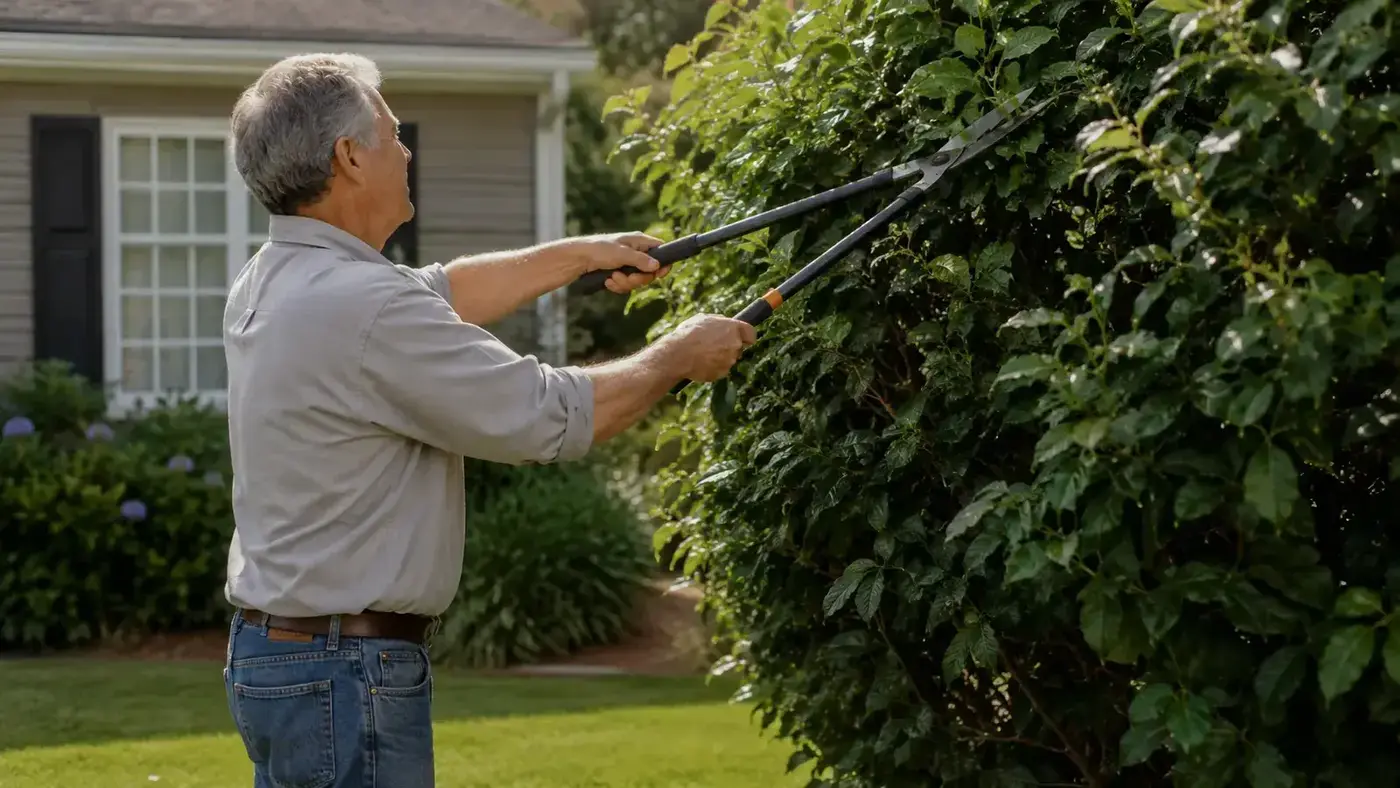
If your hands are giving you trouble mid-session, these loppers are the fix that actually works.
The Spear and Jackson 8290RS ratchet anvil loppers. Three-stage ratchet, telescoping handles, 4.6 stars from 5,183 gardeners. Built for the yard work that used to end your afternoon early.
Amazon Check Today's Price on Amazon →