
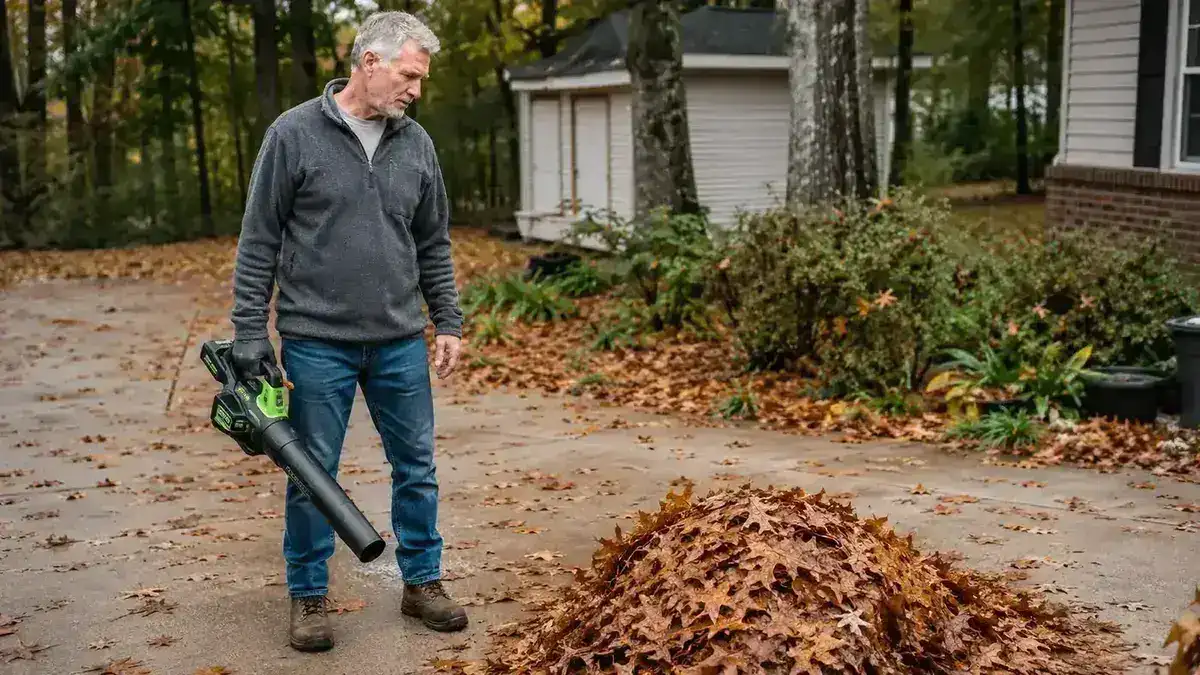
I want to like a tool before I tell you what's wrong with it. That's the honest way to do it. And I do like the Makita DUB185Z. I have been reaching for it instead of my old gas blower since my son-in-law told me to try it two falls ago. But I have also watched three neighbors order one based on the Amazon reviews, then call me a week later with the same question: why didn't they tell me the battery isn't included? So let me be the one who tells you the awkward stuff up front.
This is not the long-term performance deep-dive. That piece covers two full fall seasons, cold-weather battery behavior, and how the blower holds up over time. This one is specifically about what the five-star crowd glosses over: the real purchase cost, what happens when you're staring at a pile of soggy October leaves, and the body of people for whom I'd say skip it and buy something else.
The Quick Verdict
A genuinely well-built compact blower, but the bare-tool pricing hides the real cost, the CFM is modest, and wet leaves will test your patience.
Amazon Check Today's Price →Want the blower without the surprise at checkout? Here's what it actually costs.
The DUB185Z lists at its bare-tool price. If you already own Makita 18V batteries, that's a fair deal. If you don't, add another significant cost for a battery and charger combo before you decide.
Amazon Check Today's Price on Amazon →The Bare-Tool Price Is Not the Real Price
This is the thing that catches people. The Makita DUB185Z is sold as a bare tool. No battery. No charger. The Amazon listing makes this clear, but when you're scanning reviews and star ratings it is easy to miss. You are buying a blower body, a nozzle, and a manual. That is it.
If you already own Makita's 18V LXT line, you probably have a BL1830 or BL1850 sitting in the drawer right now. The DUB185Z slots right in and the bare-tool price is a genuine value. If you don't own any Makita tools, you need to add a battery and charger to your cart. A Makita 18V 3.0Ah battery alone runs at moderate cost new. The starter pack with battery and charger runs higher depending on what's in stock. So your actual all-in cost is considerably more than the bare-tool price you clicked on.
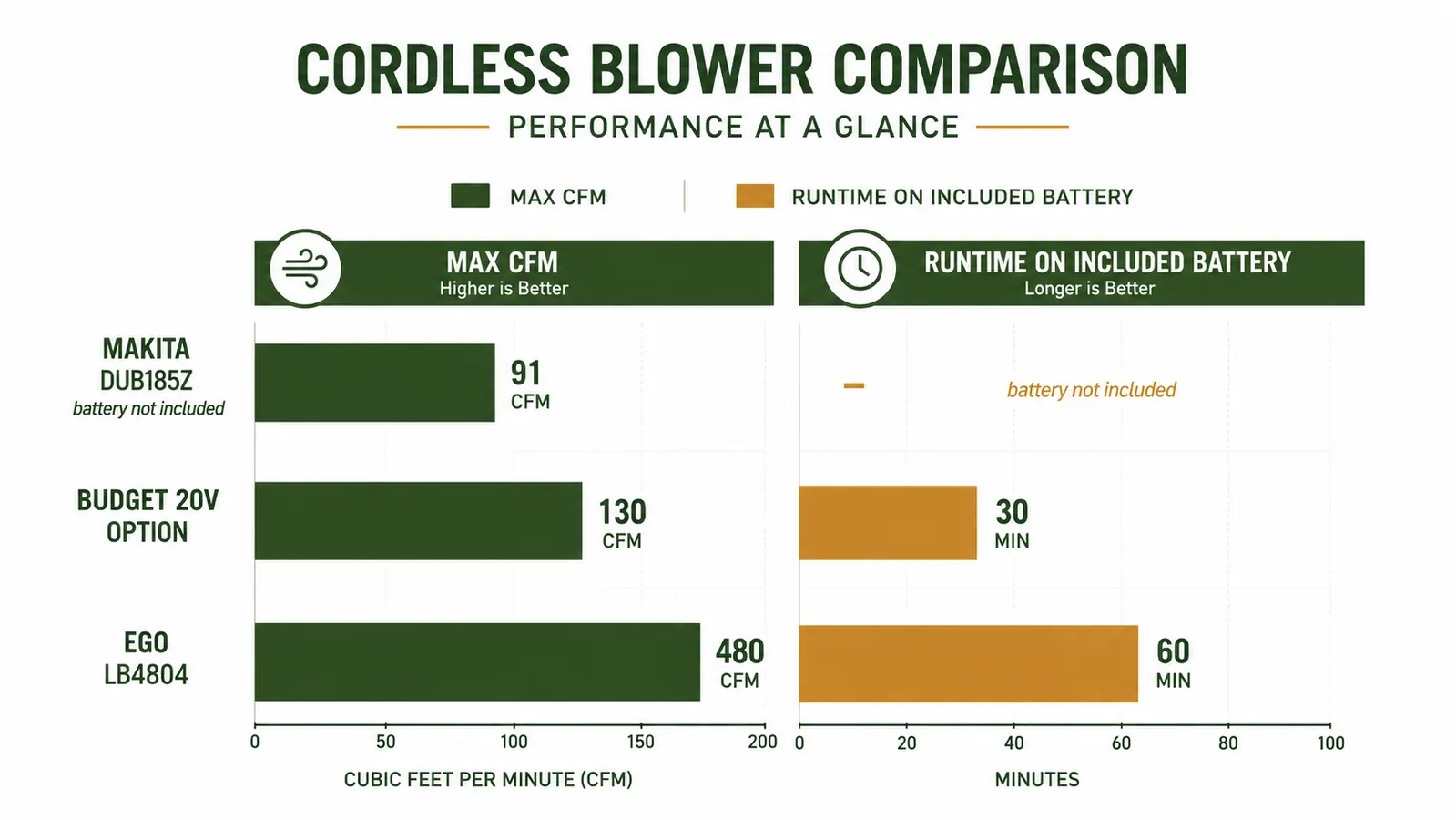
That changes the math compared to a budget cordless blower that comes with a battery included. I am not saying the Makita is overpriced for what it is. I am saying go in with eyes open. If you already have the LXT ecosystem, this blower is a fantastic add-on purchase at a fair bare-tool price. If you are starting from scratch, look at whether a kit deal or a full-package blower from another brand might land at a similar all-in number.
The CFM Numbers Are Modest, and That Matters for Wet Leaves
The DUB185Z puts out a maximum of 91 CFM at its highest speed setting. That is a legitimate number for a compact handheld in the 18V class. But here is the context the glowing reviews leave out: several budget cordless blowers in the lower price range claim 100-120 CFM, even if their actual low-speed performance and build quality don't match Makita's. On paper, the Makita looks underpowered compared to cheaper blowers.
In practice on dry leaves, 91 CFM is plenty. I cleared my 40-foot driveway in one pass and moved light debris off the patio without any trouble. The two-speed switch gives you a low setting for close-in work near plants and a high setting for moving piles down the driveway. That two-speed design is one of the things Makita got right.
Where you will feel the CFM limit is wet, matted leaves. After a two-day rain in late October, the oak leaves on my driveway were plastered flat like wet newspaper. The Makita moved them, but not cleanly. I had to overlap passes and it took longer than I expected. A backpack or higher-CFM handheld blower would have done it faster. If you are clearing a large area of dense, wet fall debris on a regular basis, the DUB185Z will get the job done but it will take patience. It is not a heavy-duty clearing machine.
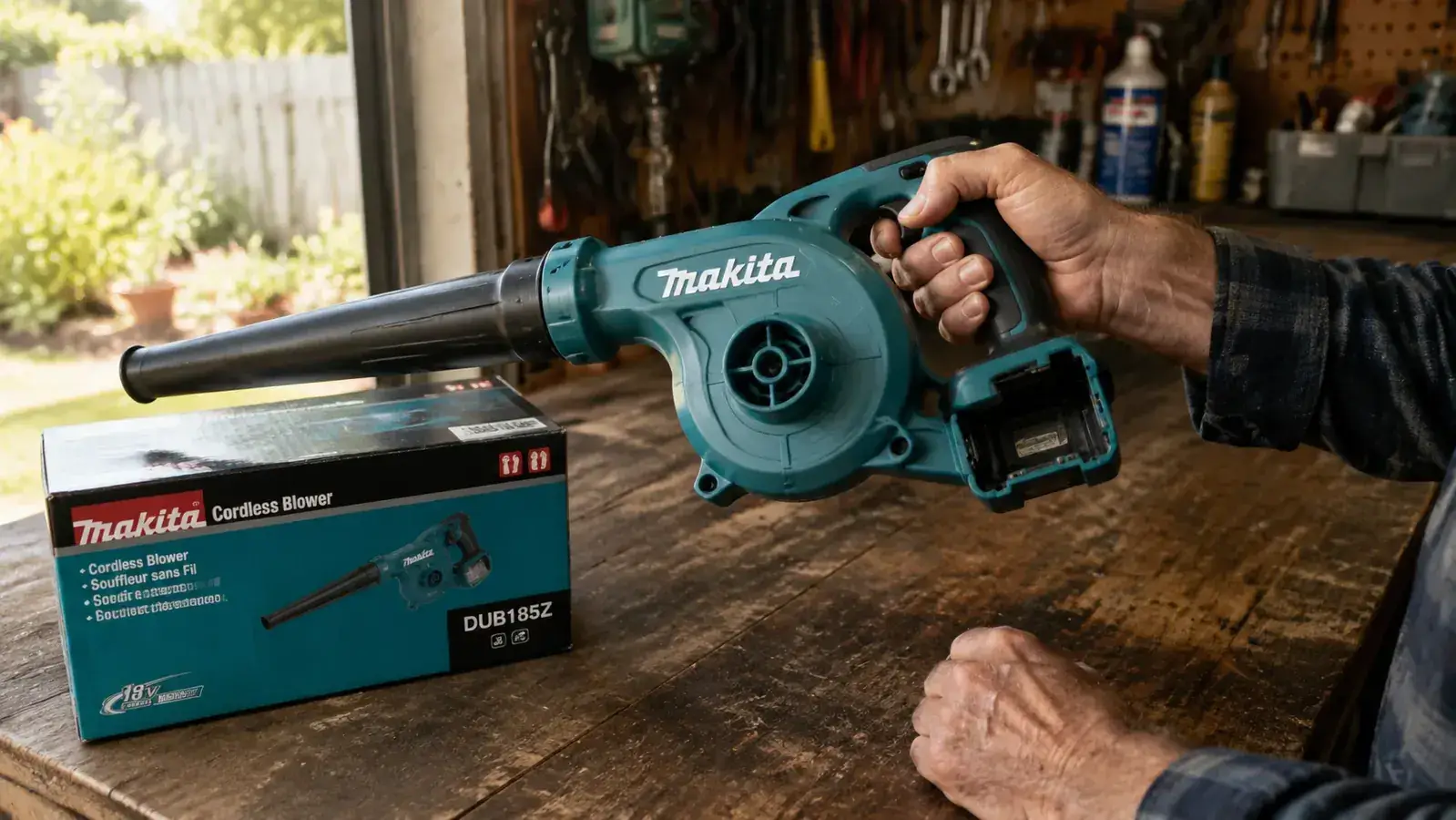
One Battery Gives You About 12-15 Minutes at Full Speed
With a 3.0Ah battery (the mid-tier option), I get around 12 to 15 minutes of runtime at high speed. On low speed you can stretch that closer to 20-25 minutes. That is enough for a small to medium property, maybe 2,000-3,000 square feet of hardscape and beds. For a compact suburban lot with a driveway and a patio, one battery typically sees me through a full session.
But if your yard is bigger, or if you are clearing a larger gravel area or a long stretch of paths, plan for a second battery. With only one 3.0Ah battery you will run out mid-job on a larger property and then stand around waiting for the charge to recover. A 5.0Ah battery extends runtime noticeably, though it also adds weight to the back of the tool. If runtime is a primary concern, look at what battery you can pair this with before you order.
One 3.0Ah battery gets you 12-15 minutes at full speed. Enough for a compact lot. Not enough for a large property unless you have a spare.
The Nozzle Is Short and That Can Bother Your Back
The DUB185Z is a compact, handheld blower. The nozzle is short. If you are taller than about five-foot-ten, or if your back is particular about how far you have to angle forward to direct airflow at ground level, you will feel it on a longer session. You end up tilting the blower downward more aggressively than you would with a longer nozzle, and after 10 or 15 minutes your forearm and shoulder start to remind you.
Some people solve this by adding an aftermarket nozzle extension, which you can find cheaply on Amazon, but it is an extra step and an extra purchase. I eventually got used to the angle and adjusted my technique, but if you have existing shoulder or back issues, the short nozzle is worth noting. Some cordless blowers in this class have a longer or adjustable nozzle that angles the output further away from your body without forcing you to tilt down.
What the Reviewers Who Love It Are Not Telling You About Themselves
The five-star reviewers on the Makita DUB185Z are telling the truth. This is a quality blower with excellent build, a solid two-speed design, and the kind of balance in the hand that you feel immediately. It is quieter than gas, lighter than most corded blowers, and there is no cord to trip over. The motor is smooth, the trigger is satisfying, and it simply works every time you pick it up.
But read the five-star reviews carefully and you will notice something: most of them already owned Makita 18V tools. They are not paying the full all-in price. They paid the bare-tool price and swapped in a battery they already had. They also tend to have smaller yards, paved surfaces, and they do their clearing when the leaves are dry. Those are the conditions where this blower is genuinely excellent. They are not glossing over the wet-leaf limitation out of dishonesty. They just never test it there.
The honest takeaway: if you match that profile, the five-star crowd is right. If you don't match that profile, there are caveats that matter to your situation.
What I Liked
- Excellent build quality; nothing rattles or flexes
- Two-speed design is genuinely useful for close-in work near plants
- Quiet enough to use early morning without bothering the neighbors
- Pairs perfectly with any existing Makita 18V LXT battery
- Light enough at 2.4 lbs that arm fatigue is minimal on short sessions
- No pull cord, no gas, no fumes, starts every time
Where It Falls Short
- Battery and charger sold separately; real all-in cost is significantly higher without existing Makita tools
- 91 CFM is modest; wet, matted leaves require extra passes and patience
- One 3.0Ah battery gives only 12-15 minutes at high speed
- Short nozzle can strain the back on longer sessions for taller users
- No variable speed; just two preset settings with nothing in between
Who This Is For
The Makita DUB185Z is the right call if you already own one or more Makita 18V LXT tools, you have a compact to medium-sized property, and the bulk of your leaf clearing happens when things are dry. It is a natural battery-platform add-on purchase that costs very little when you already have the hardware. It is also a good fit if you want a blower you can use around flower beds and planted containers without blasting everything apart, since the low speed setting is gentle and controllable. If you have sore shoulders or weak grip, the light weight and smooth trigger make this about as easy to handle as a cordless blower gets.
Who Should Skip It
Skip this one if you have no existing Makita 18V tools. The all-in cost of buying a battery and charger alongside the bare tool puts you at a price where full-kit blowers from other brands become equally or more competitive. Skip it if your yard is large, if you regularly clear after rain, or if you need to move wet pine straw or compacted leaf mats. For those jobs you want higher CFM, longer runtime, or a backpack blower that keeps the weight off your arm. And if your back is already a problem, consider whether the short nozzle angle works for your body before committing.

Already in the Makita 18V family? This blower is a no-brainer add-on.
If you have the batteries, the DUB185Z is one of the best value cordless blowers you can add to the platform. Light, quiet, well-built, and easy on the hands. Check the current price and see if it fits your setup.
Amazon Check Today's Price on Amazon →